
Build the Skills to Lead Better Conversations
Technical expertise can solve part of an environmental challenge. Productive communication, thoughtful facilitation, and effective negotiation help solve the rest.
Nelson Facilitation LLC provides environmental facilitation training for scientists, resource managers, agency professionals, conservation organizations, planners, supervisors, consultants, and others who must bring people together around complex natural resource issues.
Environmental work often requires professionals to explain complex subjects, listen to different perspectives, manage expectations, guide meetings, and help groups move toward decisions. Our training is practical, interactive, and grounded in real-world experience.
Participants gain tools they can use in meetings, project teams, public processes, negotiations, collaborative efforts, and day-to-day professional interactions. The goal is straightforward: communicate effectively, manage difficult interactions, and help create better outcomes.

Environmental professionals often need to lead conversations without having formal training in facilitation or negotiation. These workshops provide practical skills that can be applied immediately.
You’ll learn how to:
The emphasis is on skills you can use—not theory that stays in the classroom.
Practical & Interactive | Environmental Context | Real-World Applications | Individual & Team Training | In-House Options
Facilitation Skills for Scientists and Resource Managers
Learn how to plan, lead, and evaluate meetings and group processes while supporting productive participation and decision-making.
Environmental Negotiation Workshop
Build practical skills for preparing for negotiations, understanding interests and alternatives, managing difficult interactions, and working toward durable agreements.
Training can be provided for individuals, teams, or organizations and can be customized around the situations professionals encounter in their work.

Environmental professionals often work in complex stakeholder environments. Scientists, agency staff, land managers, environmental organizations, tribal representatives, consultants, local communities, elected officials, and regulated parties may bring different priorities, expectations, responsibilities, and perspectives to the same issue.
Technical knowledge is important, but it does not always prepare professionals for the human side of these situations.
Facilitation and negotiation skills can help professionals navigate those challenges more effectively.
Training may be relevant to professionals working in:
The training is designed for both professionals who are new to facilitation or negotiation and those who already have experience but want to strengthen their approach.
Facilitation and negotiation are related, but they are not the same skill.
A facilitator supports the process. The facilitator helps a group communicate, participate, organize information, explore options, and work toward productive discussions or decisions without owning the decision itself.
A negotiator represents interests, evaluates alternatives, communicates with other parties, and works toward agreement when interests or priorities differ.
Environmental professionals may find themselves needing both skill sets. Knowing which role you are playing—and what the situation requires—can make a significant difference in how you prepare and participate.

Scientists, resource managers, supervisors, and agency professionals may suddenly find themselves responsible for facilitating a public meeting, interdisciplinary team, multiagency discussion, project team, or staff meeting.
Technical expertise alone does not necessarily prepare someone to manage group dynamics, encourage participation, clarify purpose, or keep a difficult discussion productive.
The facilitation skills workshop focuses on the practical skills professionals need to design and guide effective group processes.

Participants explore how to:
Participants also consider the different purposes meetings can serve. An informational meeting, idea-generating session, decision-making meeting, and relationship-building conversation may each require a different approach.
The workshop addresses both the process and the human side of facilitation, including authority, confidence, knowledge, participation, and expectations.
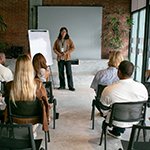
Effective facilitation begins before the meeting starts.
Participants learn how preparation can help clarify the purpose of a meeting, anticipate participation, organize the process, and identify potential challenges before they arise. They also have opportunities to practice facilitation skills and receive feedback.
Applications may include:
The emphasis is on practical tools that can be used before, during, and after a meeting.
Environmental negotiations can involve competing interests, technical information, legal and regulatory requirements, communities, resources, livelihoods, emotions, values, risks, responsibilities, timing, authority, and questions of fairness.
They may also involve unequal resources, different levels of power, and parties who have very different ideas about what a successful outcome should look like.
The negotiation training for environmental professionals offered by Nelson Facilitation LLC focuses on preparing for these realities.
The workshop introduces principled, interest-based negotiation concepts and applies them to environmental and natural resource situations.
Preparation is central to effective negotiation.
Participants consider:
For example, a party may take a position focused on habitat protection, while another may be concerned about economic stability or operational certainty. Understanding the interests behind those positions can create opportunities to explore options that may not be apparent when discussions remain focused only on stated demands.

Negotiation skills are developed through practice, not just presentation.
The workshop uses simulations, role-playing, case studies, and experiential exercises to help participants apply negotiation concepts to realistic situations.
Depending on the training, participants may practice:
The goal is not simply to reach an agreement. A durable agreement may also need to address responsibilities, timelines, monitoring, communication, contingencies, and what happens if disagreements arise later.
No prior negotiation training is required. The workshop can be useful for professionals who negotiate regularly as well as those who find themselves negotiating as part of another role.

Facilitation and negotiation address different situations. Consider the type of challenge you face.
Some professionals benefit from both.
If meetings become unfocused, participation is uneven, or groups struggle to move from discussion to action, facilitation skills may be the better starting point.
If competing interests, trust, alternatives, bargaining, or agreement are central to the situation, negotiation training may be more appropriate.
When professionals regularly work across organizational or stakeholder boundaries, both skill sets can be valuable.
This training is designed for professionals who work with people, information, uncertainty, and disagreement as part of their environmental or natural resource responsibilities.
Participants may include:
You may not consider yourself a facilitator or negotiator. You may simply be the person who has been asked to lead the meeting, coordinate the project, represent the organization, bring different groups together, or help resolve a difficult issue.
These are situations where facilitation and negotiation skills can become especially useful.

The strongest training opportunities give participants a chance to try a skill, reflect on what happened, and try again.
Facilitation participants may practice opening a meeting, establishing expectations, framing an issue, encouraging participation, summarizing discussion, responding to interruptions, reaching agreement on next steps, and closing effectively.
Negotiation participants work through simulations and role-playing exercises that allow them to experience the challenges of negotiation rather than simply hear about them.
Practice can reveal habits that are difficult to recognize otherwise.
A participant may discover that they move too quickly toward solutions, do not ask enough questions, avoid exploring underlying interests, or provide technical information before understanding what others need from the conversation.
This practical emphasis helps connect training to the situations participants actually encounter at work.

Build Training Around Your Actual Work
In-house facilitation training for agencies and customized negotiation training can be tailored to an organization’s specific needs.
Rather than relying on a generic workplace training model, the program can focus on the situations your professionals actually face.
Potential areas of focus include:
A pre-workshop survey or discussion can help identify the situations, challenges, and skills most relevant to the group.
Training may be designed for a small group of internal facilitators, supervisors and project managers, or a broader program team.
Customized negotiation training can similarly focus on the organization’s actual negotiation environment. A regulatory agency, conservation organization, resource-management team, and corporate environmental group may face very different challenges.
Applications, case studies, and simulations can be selected around those differences.
The objective is to help participants prepare for the real conversations ahead—not simply learn abstract theory.
Training With Depth, Experience & Environmental Context
Environmental facilitation and negotiation require more than knowledge of general communication techniques. They require an understanding of the environments in which those conversations take place.
Jim Nelson brings experience in biological science, natural resource management, environmental regulation, facilitation, negotiation, and mediation.
He is a retired California Department of Fish and Game Staff Environmental Scientist who worked as a biologist and supervisor of technical staff. His experience included complex environmental and organizational issues, public meetings, conservation, and negotiations.
After retiring in 2006, Jim continued his work as a trainer and facilitator, teaching facilitation, public meeting techniques, environmental negotiations, and CEQA basics.
That background provides the environmental context behind the training and helps connect facilitation and negotiation concepts to the realities professionals encounter in natural resource and environmental work.
The training is grounded in environmental and natural resource situations rather than generic workplace examples.
Participants leave with tools and approaches they can apply to meetings, negotiations, project teams, and other professional interactions.
Workshops incorporate discussion, exercises, simulations, role-playing, case studies, and opportunities to practice skills.
Training can be adapted to the experience level, responsibilities, and situations of the people in the room.
The goal is to help professionals build skills they can continue using long after the workshop ends.
The next meeting may involve competing priorities. A stakeholder may bring a difficult concern. A project may depend on agreement among people who see the issue very differently. Technical information may need to be explained without losing sight of the people affected by the decision.
Preparation matters.
A prepared facilitator can clarify purpose, anticipate participation, select an appropriate process, and create conditions for a productive conversation.
A prepared negotiator can identify interests and alternatives, develop questions, consider how information should be communicated, and recognize when it may be necessary to slow down, change direction, or explore another option.
Nelson Facilitation LLC provides practical environmental facilitation training, negotiation training, and customized programs designed around these challenges.
Whether you are looking for individual professional development, team training, or in-house facilitation training for agencies, the focus remains the same: build the skills needed to bring difficult conversations forward with greater preparation and confidence.
The right skills can change how professionals approach a meeting, a negotiation, or a difficult environmental issue.
Invest in the people who bring those conversations forward.
Contact Nelson Facilitation LLC
E-mail: nelsonfacilitation@gmail.com
Phone: 530-945-3104
Sed ut perspiciatis unde omnis iste natus ut perspic iatis.
The USA —
785 15h Street, Office 478 Seattle, WA 81566